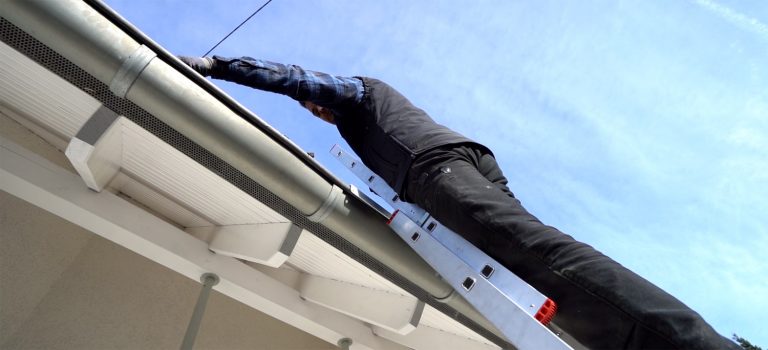
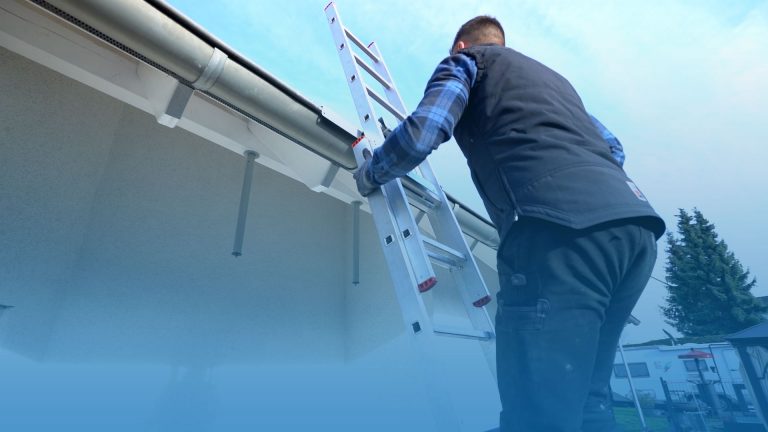
In short: A gutter can also be cleaned without a ladder, for example with a telescopic pole or a vacuum with a gutter attachment. But it is usually only thorough from the ladder, because only there can you see what is in the gutter and remove stubborn dirt by hand. If you reach for the ladder, you should secure it at the top at the gutter, set it at the right angle and not lean out to the side while working.
At the latest when rainwater runs over the edge of the gutter instead of into the downpipe, it is time: leaves, moss and sludge have to go. Many people then look for a way to clean the gutter without a ladder, and that is understandable. In this guide we compare the options without a ladder with classic cleaning from the ladder. And we show what we at WeMa-Step pay attention to so that the ladder does not start to slip at the top of the gutter.
The key points
- Clean the gutter at least once a year, ideally in late autumn after the leaves have fallen.
- Without a ladder it works with a telescopic pole, a vacuum with a gutter attachment or a pressure washer with a gutter nozzle. But you cannot see into the gutter.
- Cleaning from the ladder is the most thorough, and you spot damage to the gutter and brackets at the same time.
- The top three rungs of a leaning ladder are off limits, and your centre of gravity belongs between the stiles.
- A ladder stabiliser holds the ladder at the top of the gutter, especially when you move while cleaning.
When and how often should you clean the gutter?
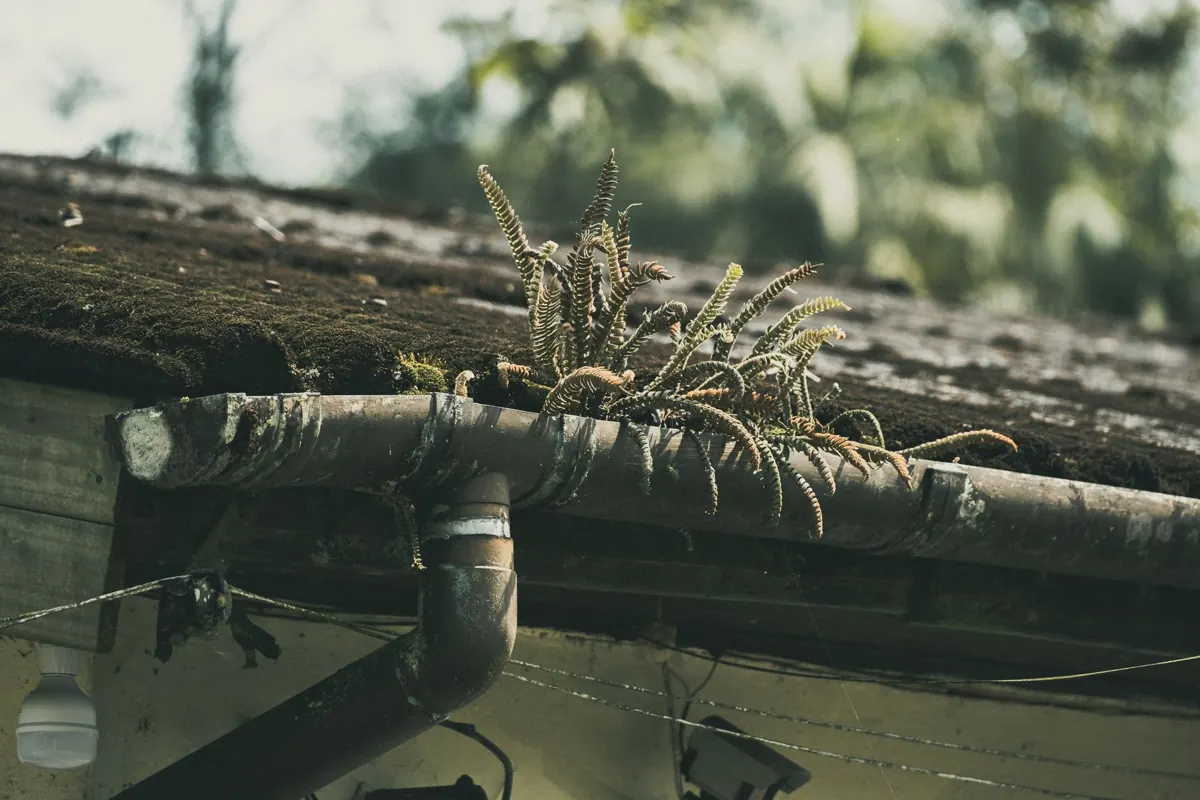
For most houses, one cleaning a year is enough. The best time is late autumn, when the trees have shed their leaves. If large trees stand right next to the house, a second round in spring is worthwhile, because then blossoms, seeds and pollen end up in the gutter.
A few signs show that the gutter is full:
- When it rains, water runs over the edge of the gutter and drips down the facade.
- Grass or small plants grow out of the gutter.
- The downpipe gurgles, or hardly any water arrives at the bottom.
- Dark streaks or moss form on the facade below the gutter.
Waiting does not pay. Wet leaves turn into heavy sludge over time, which blocks the downpipe and puts extra load on the gutter. In winter, standing water can freeze and deform the gutter.
Cleaning the gutter without a ladder: the options
If you would rather not climb a ladder, there are now several aids to choose from. They all have one thing in common: they work from the ground, so without a view into the gutter.
| Method | How it works | Limits |
|---|---|---|
| Telescopic pole with gutter attachment or gutter brush | A curved grabber or a brush at the end of the pole pushes leaves out of the gutter | The longer the pole, the harder it is to handle. Stubborn sludge is hard to get out |
| Wet and dry vacuum with gutter kit | Extended suction pipes with a curved end suck leaves straight out of the gutter | Works best with dry leaves. Wet sludge blocks the pipe |
| Pressure washer with gutter nozzle | An angled lance flushes the gutter with water pressure | Dirt splashes onto roof, facade and windows. Loosened leaves can be flushed into the downpipe and block it |
| Gutter robot | A small device travels through the gutter and pushes the dirt ahead of it | Still has to be placed in the gutter, usually from the ladder |
| Specialist company | Roofers or building cleaners clean using a ladder, scaffolding or a cherry picker | Costs money and needs an appointment |
For light, dry leaves, a pole and a vacuum are a good choice. As soon as the gutter has not been cleaned for a long time, however, they reach their limits. Then there is a layer of wet leaves and soil that sticks and can only be removed by hand.

When the ladder is the better choice
From the ladder you can see what you are doing. That sounds trivial but makes all the difference. You can tell whether the inlet to the downpipe is clear, whether a leaf guard basket is blocked and whether the gutter sags or leaks anywhere. Loose gutter brackets, cracks at the joints or rust are not noticed from the ground.
Then there is the stubborn dirt. With gloves and a small gutter scoop you remove it piece by piece. Afterwards you rinse with the garden hose and check that the water drains away cleanly.
Cleaning the gutter safely from the ladder: step by step
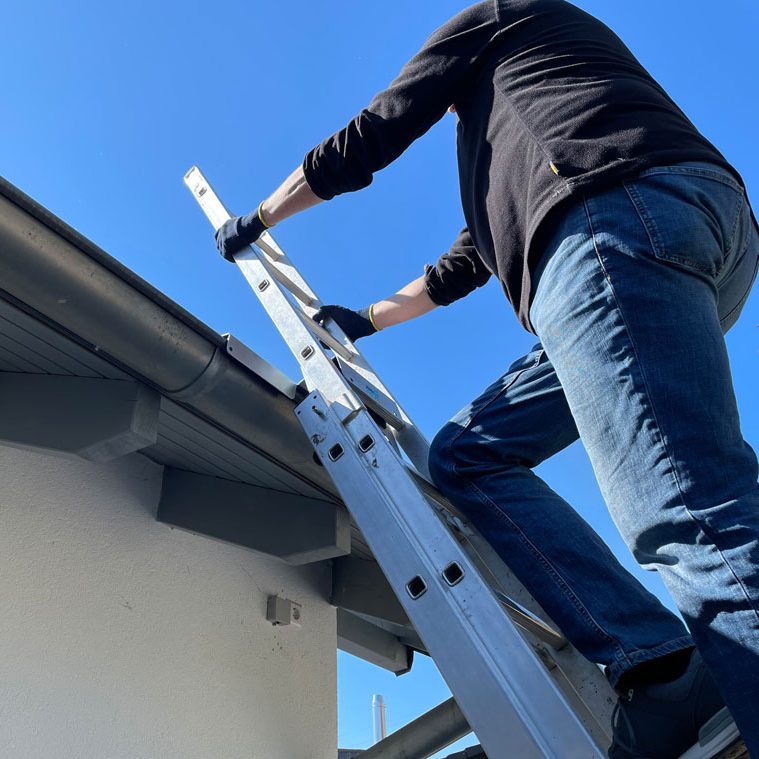
- Choose the right ladder: Take a leaning ladder that is long enough. You must not stand on the top three rungs. The ladder must therefore be long enough for you to reach the gutter comfortably from the fourth rung from the top.
- Check the standing surface: The ground must be level and load-bearing. On grass or soft ground a stile easily sinks in, and the ladder then stands crooked.
- Set it up correctly: The leaning angle is 65 to 75 degrees. How to find the angle without a measuring device and what matters at the gutter edge is explained in our guide Leaning a ladder against the gutter.
- Secure the ladder head: At the top, the ladder rests only on the rounded edge of the gutter. Without securing, it can slip sideways.
- Do not lean out: Your centre of gravity should always be between the stiles. It is better to clean a shorter section and move the ladder more often.
- Never move it from the top: Always climb all the way down to move the ladder. The German DGUV rules for ladders expressly prohibit moving a leaning ladder from above.
- Keep both hands free: A bucket with a hook on the rung takes the dirt. This way you do not have to carry anything in your hand up the ladder.
- Finally, the downpipe: Rinse the gutter with the garden hose towards the downpipe. If the water backs up, the pipe is blocked. A drain spiral from below often helps then.
Choose a dry day without wind for the job. Wet rungs are slippery, and gusts act on a long ladder more strongly than you think from the ground.

Cleaning the gutter on a tall house
The higher the gutter, the longer and heavier the ladder becomes. For a two-storey detached house, a sliding ladder or a multi-part leaning ladder is usually enough. On taller houses, setting up alone becomes difficult, and every small movement at the top is transmitted more strongly to the ladder.
This is where a secure hold at the ladder head pays off. If you clean the gutter yourself regularly, it gives you a lot of peace of mind on the ladder. If the gutter is above a conservatory, a carport or a steep slope, there is no safe standing place for the ladder. Then a specialist company with scaffolding or a cherry picker is the better choice.

Our experience: the risk is leaning out to the side
When cleaning the gutter you do not stand still. You reach to the left, then to the right, pull at a stuck clump of leaves and almost automatically lean a little to the side. These sideways forces push a ladder that rests only on the gutter edge along, bit by bit. You do not notice anything at the bottom, but at the top it is the most dangerous moment.
That is why the WeMa-Step starts at the top. The ladder stabiliser is fitted to the top of the leaning ladder and hooked into the gutter with two U-brackets. The U-brackets have a foam rubber coating and rest on at least one gutter bracket. This way the ladder holds at the top even when you move while cleaning. The shape also sets the leaning angle of 65 to 75 degrees. To move the ladder, lift it out of the gutter and hook it in again at the next spot.

For businesses that clean gutters professionally, such as caretaker services or building cleaners, this is also a matter of occupational safety. The rules for ladders in business use in Germany require the ladder head to be secured against slipping. What to bear in mind and how the BG BAU funds ladder accessories is summarised on the page Fall protection on the ladder zusammengefasst.
Which model suits gutter cleaning?
 WeMa-Step BASIC 2.0For the gutter on your own house with standard rungsTo the model ›
 WeMa-Step PRO 2.0Robust for frequent cleaning, at gutter and flat roofTo the model ›
 WeMa-Step CLASSICFor ladders with wide rungs or step-type rungsTo the model ›
 WeMa-Step UNIVERSALIf a flat roof is added alongside the gutterTo the model ›
You can find all models compared on our page on ladder stabiliser for the gutter. If you also climb onto a flat roof, a garage or a motorhome, read on at the page Ladder safety for the flat roof.
Frequently asked questions
Can you clean a gutter without a ladder?
Yes, with a telescopic pole with gutter attachment, a vacuum with a gutter kit or a pressure washer with a gutter nozzle. This works well with dry leaves. But you cannot see stubborn sludge and damage to the gutter from the ground.
How often should you clean the gutter?
At least once a year, ideally in late autumn after the leaves have fallen. If large trees stand next to the house, a second round in spring makes sense.
Which ladder do I need for cleaning the gutter?
A leaning ladder long enough for you to reach the gutter from the fourth rung from the top. The top three rungs must not be stood on. At the top of the gutter the ladder should be secured against sideways slipping.
What can you do if the downpipe is blocked?
First rinse from above with the garden hose. If the water still backs up, clear the blockage with a drain spiral from the inspection opening or from the lower end.
Does a leaf guard replace cleaning?
Not entirely. A guard holds back coarse leaves, but fine dirt and seeds still get into the gutter. In addition, leaves collect on the guard. Cleaning becomes less frequent but does not disappear.
Conclusion
For a quick clean with dry leaves, a telescopic pole or vacuum is enough. For a thorough job with a view of possible damage, clean the gutter from the ladder. Then a secure footing, the right angle and a firm hold at the ladder head matter, so that the ladder does not wander sideways while you work.
To the WeMa-Step ladder stabiliser for the gutter
Source: DGUV Information 208-016 “Handlungsanleitung für den Umgang mit Leitern und Tritten”.