In short: In Germany, businesses must have their ladders inspected regularly. How often and by whom is set by the employer in the risk assessment. The DGUV recommends an inspection at least once a year by a competent person, and the result must be documented. In addition there are the check before each use, the annual instruction and clear rules on how long and how high work may be done from a ladder.
Ladders are part of everyday life in many businesses. That is exactly why they easily go unnoticed: they stand in the warehouse or on the company van, are used daily and rarely looked at closely. In this guide we summarise what the DGUV and the BG BAU require for ladder inspection in Germany, who may carry it out and what has to be documented. We also show which rules apply when working on a leaning ladder, because an inspection alone does not make a ladder safe.
The key points
- Type, scope and deadlines of the ladder inspection are set by the employer in the risk assessment.
- The DGUV recommends inspecting ladders at least once a year.
- The inspection may be carried out by a competent person who has been appointed for it. This does not have to be an external expert.
- The result is documented, for example in a ladder log book or with an inspection tag.
- Before each use, the user checks the ladder for visible defects.
- At a standing height of more than two metres, work from the ladder may last no more than two hours per shift.

Is ladder inspection in a business mandatory?
Yes. Ladders are work equipment, and the German Ordinance on Industrial Safety and Health applies to work equipment. In the risk assessment, the employer must determine which inspections are necessary, how extensive they are and at what intervals they take place. The BG BAU summarises this in its modules on leaning ladders and stepladders: define type, scope and deadlines, comply with them and document the results.
There is no fixed deadline in the law. However, DGUV Information 208-016, the guide to using ladders and steps, recommends an inspection at least once a year. If you use your ladders heavily, for example daily on a building site, you inspect them more often.
These duties do not apply to private individuals. The rules still describe well what matters for a safe ladder.
Who may inspect ladders?
The inspection is carried out by a person who is competent to inspect. The employer decides which requirements this person must meet. The DGUV refers to the Technical Rules for Industrial Safety TRBS 1201 and TRBS 1203.
In practice this is often an experienced employee who knows the company's ladders and has been trained for the inspection. An external inspection service is possible but not required. What matters is that the person is expressly appointed and knows what to look for.
What is checked during a ladder inspection?
DGUV Information 208-016 contains a checklist for the inspection in its appendix. At its core, the question is whether the ladder is still as stable and complete as when the manufacturer delivered it:
- Stiles and rungs or steps: not cracked, not split, not bent or kinked.
- Connections: rungs sit firmly in the stiles, nothing wobbles or has play.
- Ladder feet: foot caps present and not worn, so the ladder does not slip at the bottom.
- Fittings and hinges: on stepladders and combination ladders also the spreader brace.
- Accessories: foot extensions, stile extensions or a ladder stabiliser are inspected too.
- Marking: type plate and instructions for use are legible.
Ladders with defects must no longer be used. According to the BG BAU, cracked stiles or rungs are not patched up. After a repair, the ladder must be inspected again by a competent person before it goes back into use. Wooden ladders, incidentally, do not get an opaque coating because it would hide cracks.
Ladder log book and inspection tag: how to document the inspection
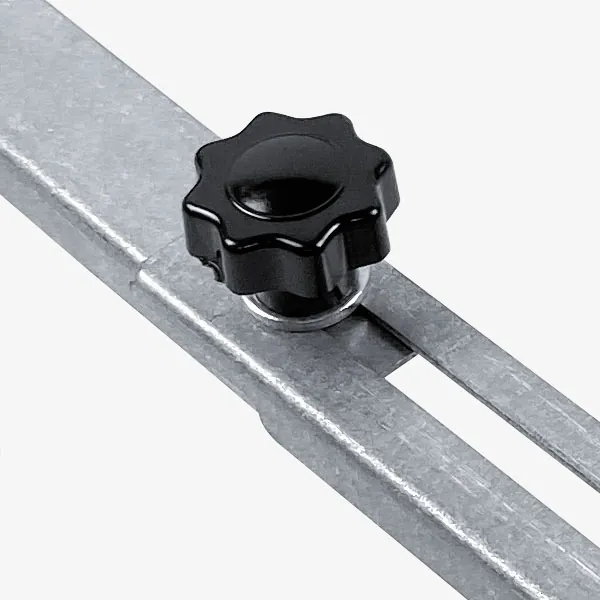
Every inspection is recorded. As examples, the BG BAU names the ladder log book, a checklist or an inspection tag on the ladder. The DGUV recommends numbering the ladders and combining the completed checklists into a log book.
Good documentation answers three questions for every ladder: when was it last inspected, by whom, and with what result. If you also attach a tag with the next inspection date, you can see at the vehicle which ladder is due.
Check before each use
The regular inspection does not replace a quick look before climbing. According to the DGUV, the user checks the ladder before every use to make sure it is in proper condition. This takes a minute: look at stiles and rungs, check the feet, and make sure accessories are properly attached. If a defect is noticed, the ladder stays where it is and the defect is reported.
Risk assessment and instruction
Before a ladder is used at all, the employer must clarify in the risk assessment whether it is the right work equipment. The BG BAU puts it clearly: ladders are to be limited to work of low risk and short duration. If scaffolding, a platform ladder or an aerial work platform is safer, that equipment takes priority.
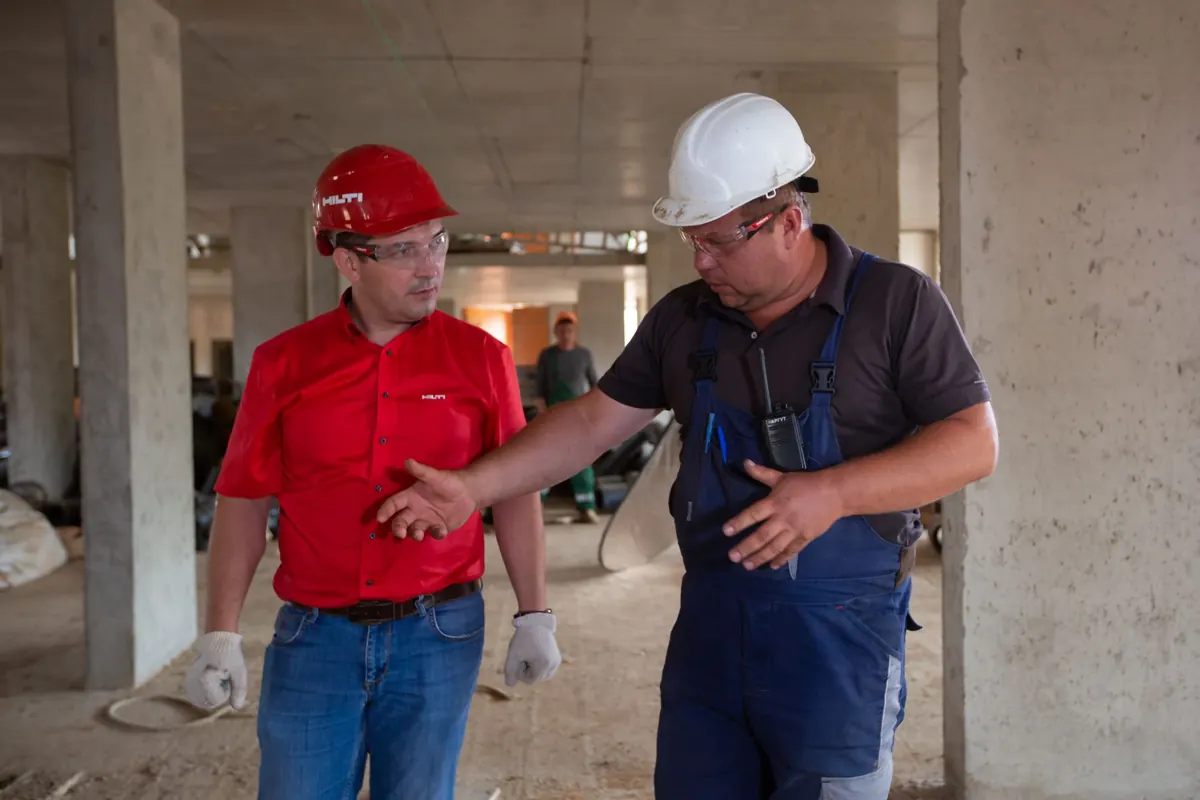
Then there is instruction. Under the German Occupational Safety and Health Act, employees are instructed on hiring, when given new tasks and when new work equipment is introduced, during working hours. DGUV Regulation 1 requires the instruction to be repeated and documented at least once a year. For ladders, this includes how to set them up, lean them and secure them correctly.
Rules for working on a leaning ladder
The ladder inspection makes sure the ladder is in order. How it is used is governed by TRBS 2121 Part 2 and the BG BAU modules. For leaning ladders, these are the most important points:
| Rule | What applies |
|---|---|
| Working time | At a standing height of more than 2 metres, a maximum of 2 hours per work shift |
| Standing height | For temporary work, a maximum of 5 metres |
| Standing surface | Both feet stand on a step or platform |
| Tools and materials | In construction work a maximum of 10 kilograms, wind exposure area a maximum of 1 square metre |
| Machines | No working with equipment that needs both hands, for example hand-held machines or pressure washers |
| Ladder as access | Only up to a height difference of 5 metres |
| Leaning angle | Rung ladders 65 to 75 degrees, step ladders 60 to 70 degrees |
| Overhang | At least 1 metre above the point of exit or another handhold |
| Top rungs | The top three rungs or steps are not stood on |
One point is often overlooked: anyone working on a leaning ladder for a longer time should stand with both feet on one step. Rung ladders are therefore mainly suited to business use as access, for example onto the roof. How to lean a ladder correctly against the gutter is explained in our guide Leaning a ladder against the gutter. What matters when cleaning the gutter from the ladder is shown in our guide Cleaning gutters: with or without a ladder?
Our experience: the ladder head is the weak point
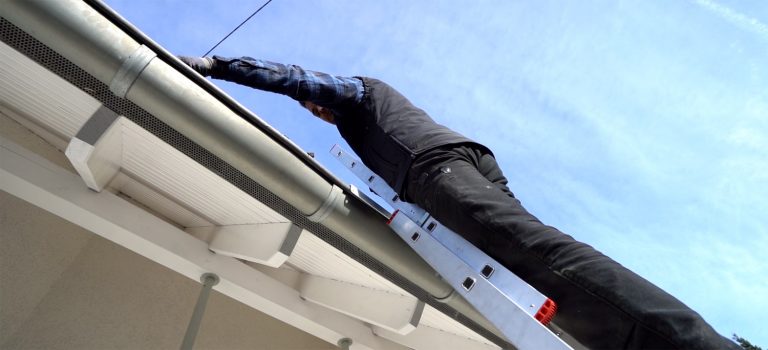
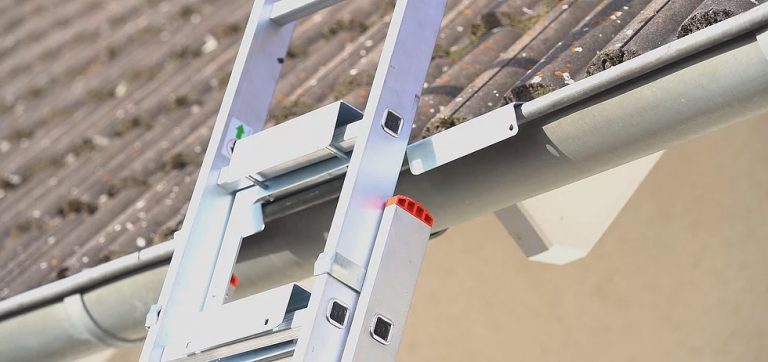
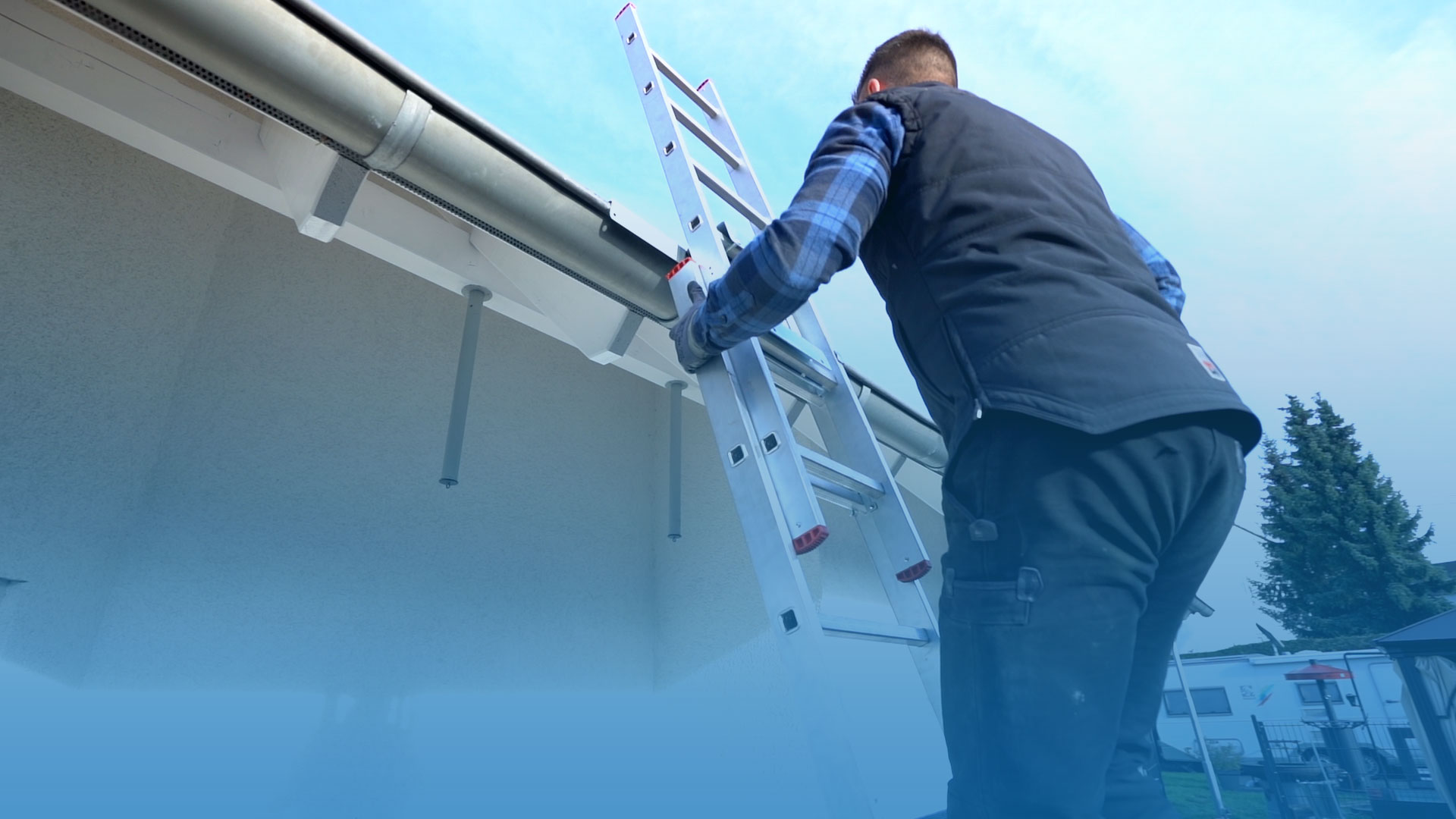
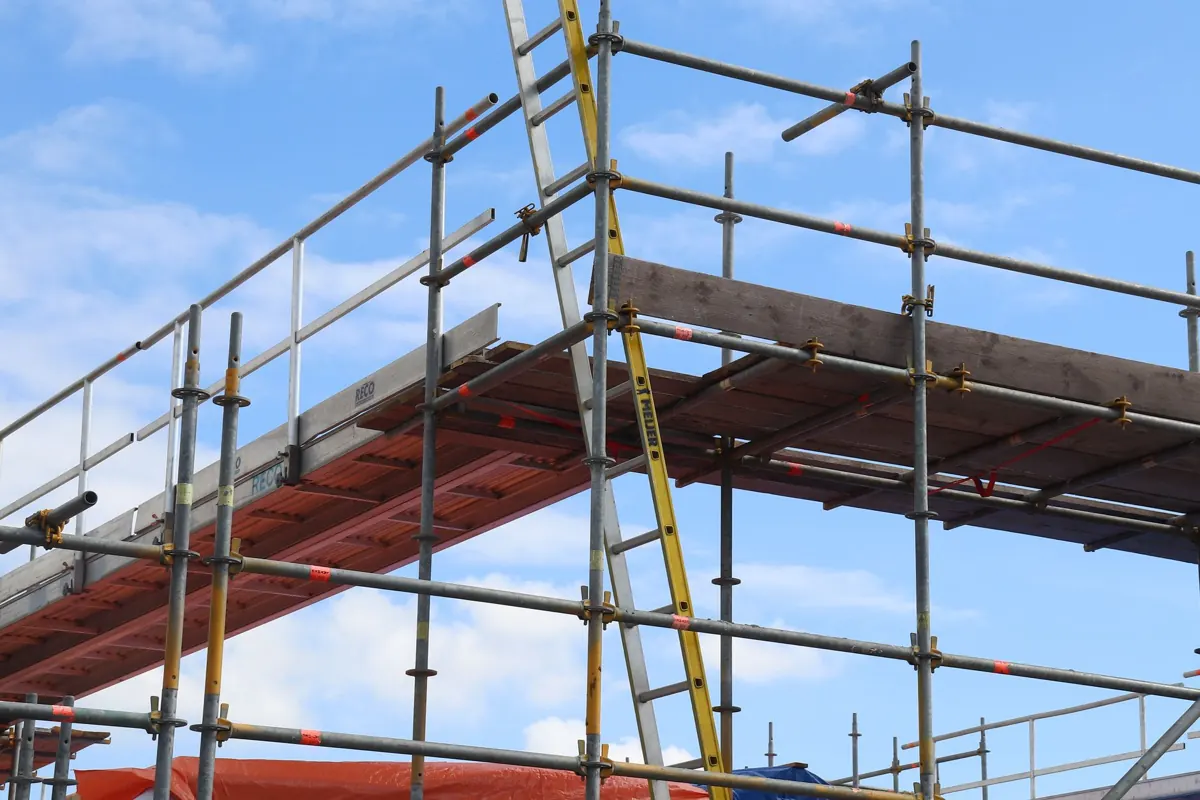
The BG BAU requires leaning ladders to be secured against sliding, falling, tipping and slipping off. As examples it names tying the ladder head, fixing the ladder foot and ladder accessories such as a ladder stabiliser. At the bottom the ladder can usually be secured well. At the top, at the gutter, it rests only on a rounded edge, and tying it down is hardly possible.
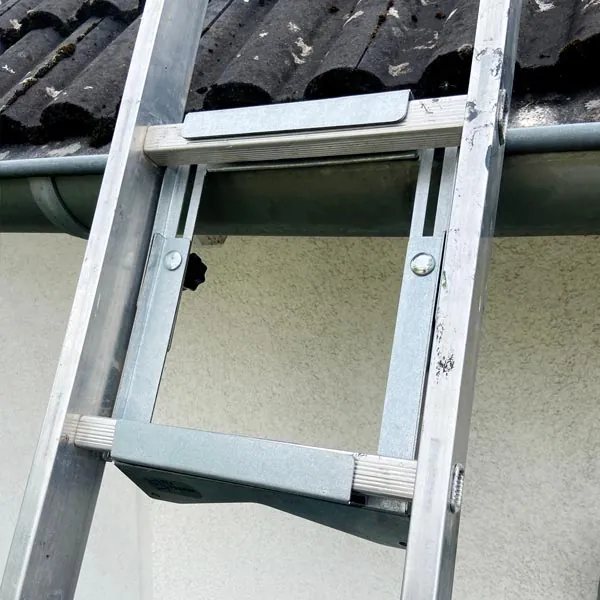
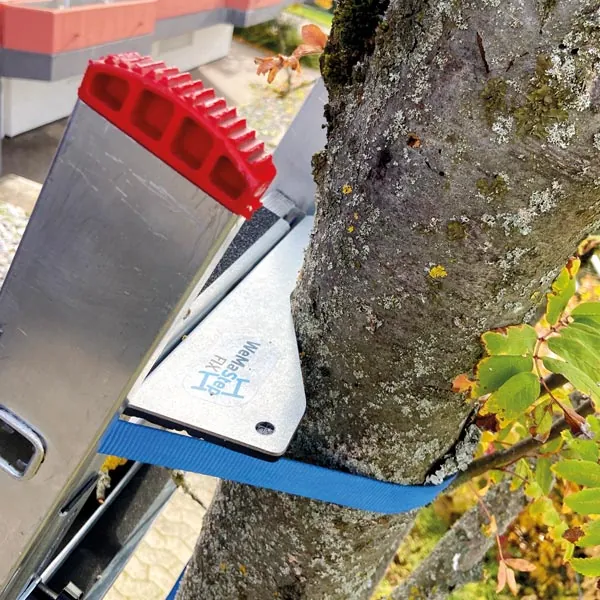
This is exactly where the WeMa-Step comes in. The ladder stabiliser is fitted to the top of the leaning ladder and hooked into the gutter with two U-brackets. The U-brackets have a foam rubber coating and rest on at least one gutter bracket. For the ladder inspection this means: the ladder stabiliser is an accessory and is inspected too. We recommend checking that the fixing sits firmly and that the foam rubber coating is intact.
In Germany, the BG BAU funds ladder accessories that improve stability through its occupational safety bonus. Several WeMa-Step models are on the funding list. You can find everything on funding, industries and quotes for several ladders on our page Fall protection on the ladder.
Which model suits your business?


We compare all models on our page on ladder stabiliser for the gutter.
Frequently asked questions
How often do ladders have to be inspected?
The deadline is set by the employer in the risk assessment. The DGUV recommends at least one inspection a year. With heavy use, inspections are carried out more often.
Who may carry out a ladder inspection?
A person who is competent and appointed to inspect. The employer determines which requirements this person must meet, based on TRBS 1201 and 1203. Often this is a trained employee of the business.
As a private person, do I have to have my ladder inspected?
No, the inspection duty applies to work equipment in business use. A quick look at stiles, rungs and feet before each use also makes sense at home.
What happens to a damaged ladder?
It must no longer be used. Cracked stiles or rungs are not patched up. After a professional repair, a competent person inspects the ladder before it is used again.
Is a ladder stabiliser inspected during the ladder inspection?
Yes. Accessories fitted to the ladder are part of the inspection. For a ladder stabiliser, check that it sits firmly and that the contact surfaces are undamaged.
Conclusion
In Germany, ladder inspection is mandatory in business use, the deadline is set by the risk assessment, and the DGUV recommends at least once a year. The inspection is carried out by a competent person and documented in the log book or with a tag. Just as important are the check before each use, the annual instruction and a ladder that is firmly secured at the top.
To fall protection on the ladder for businesses
Sources: DGUV Information 208-016 “Handlungsanleitung für den Umgang mit Leitern und Tritten”, chapters 5 and 6; BG BAU modules B 131 “Anlegeleitern” and B 132 “Stehleitern, Podestleitern, Plattformleitern” (as of 07/2021); TRBS 2121 Part 2 “Gefährdung von Beschäftigten bei der Verwendung von Leitern”; Arbeitsschutzgesetz § 12; DGUV Vorschrift 1 § 4.